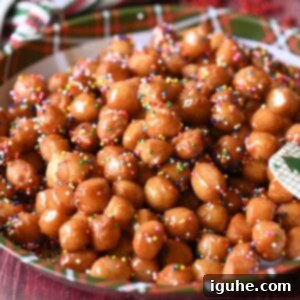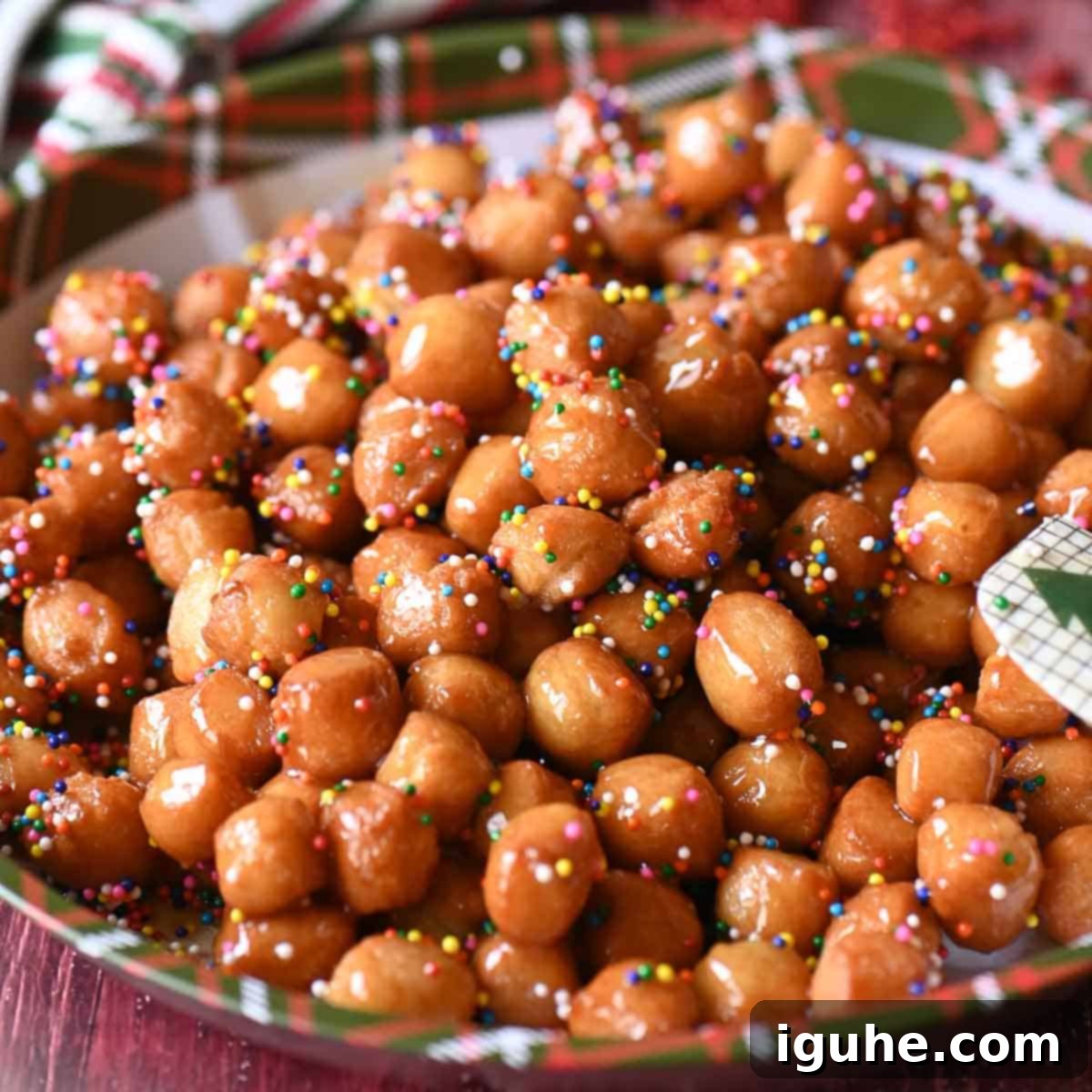
Authentic Italian Honey Balls (Struffoli) Recipe
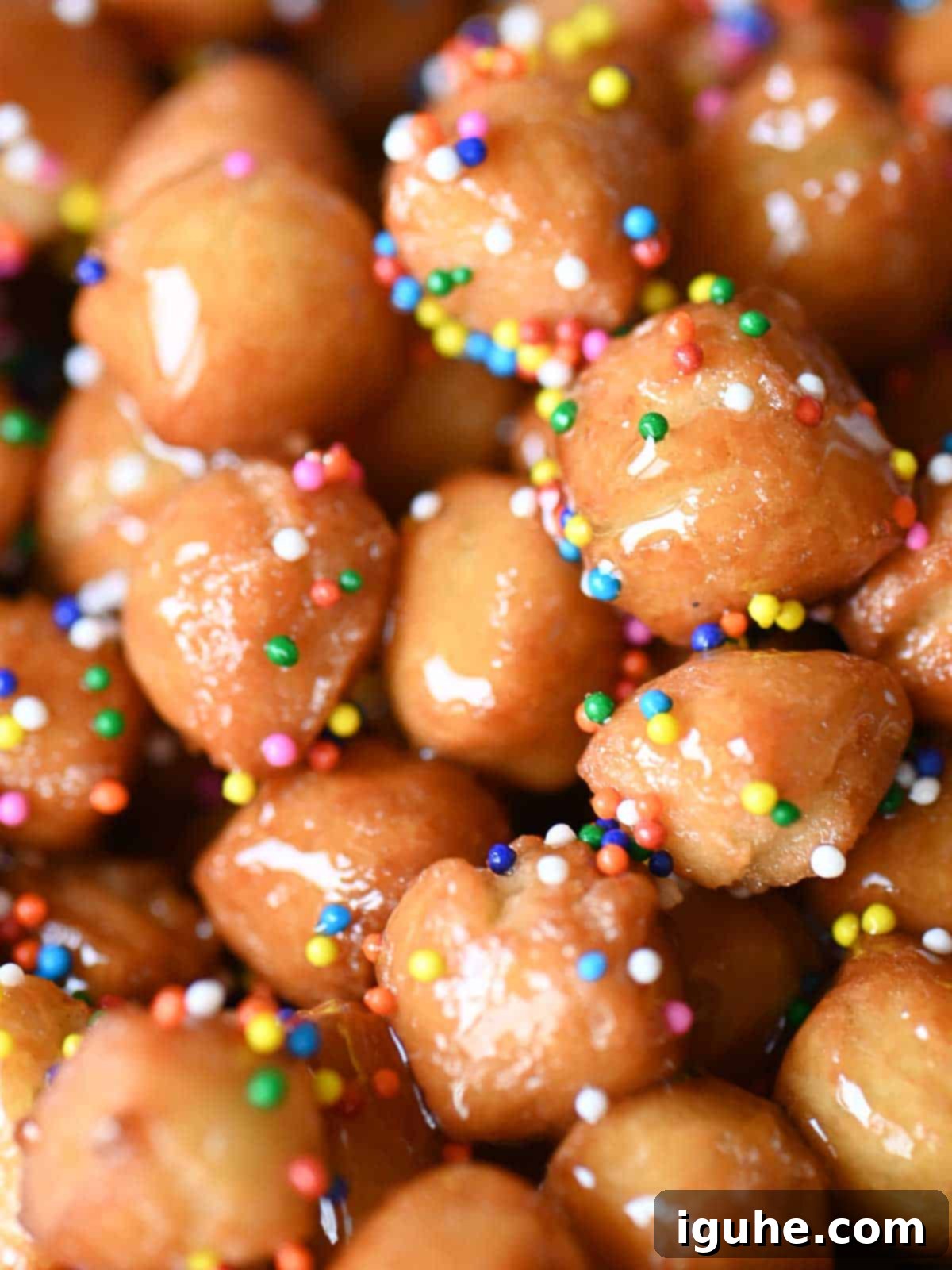
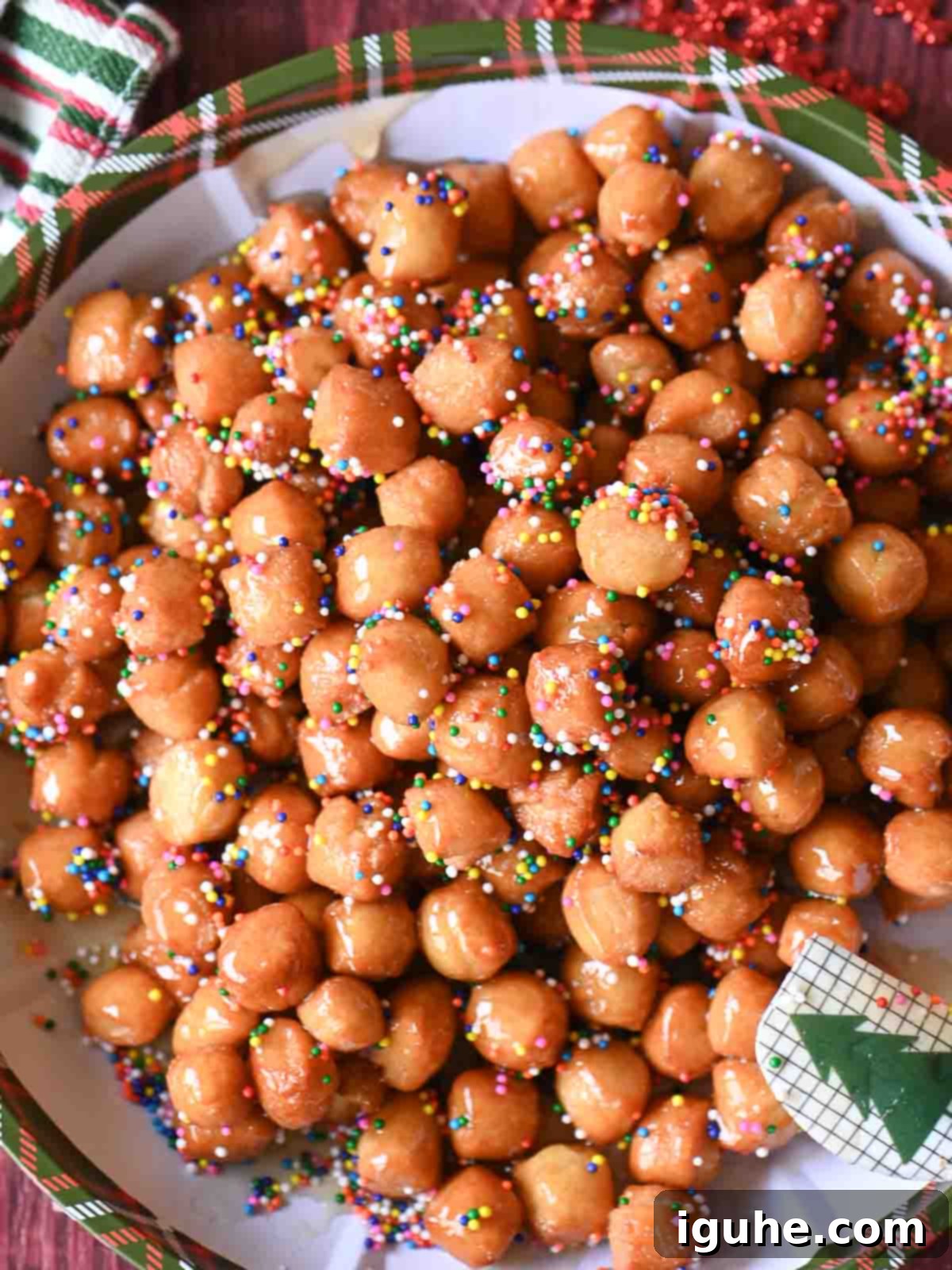
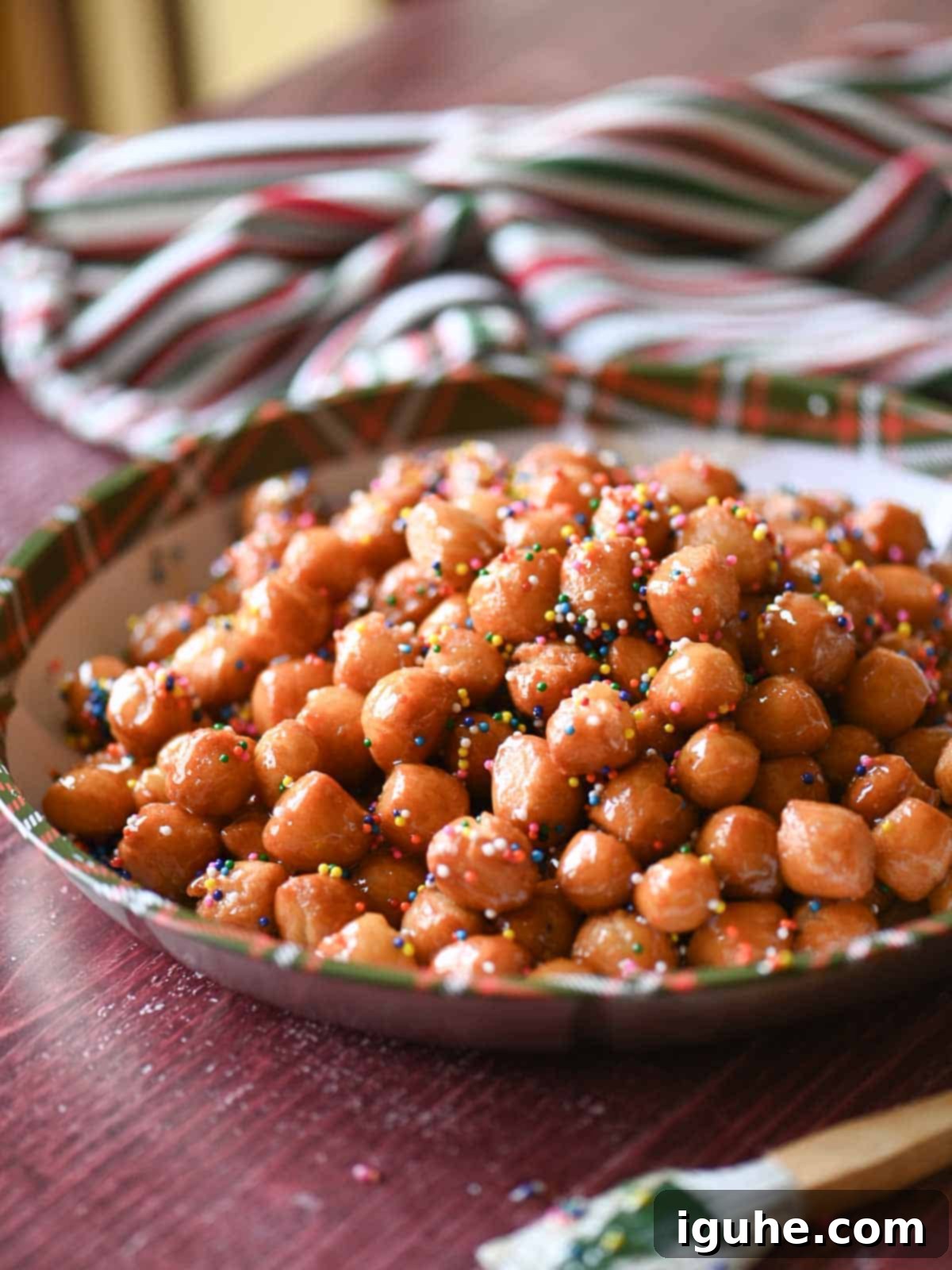
Italian Honey Balls, also known as Struffoli, are delightful, bite-sized pieces of fried dough, golden and airy, and generously coated in a luscious honey glaze. Traditionally served during Easter and Christmas, these festive treats are a cherished staple in Italian homes and bakeries. Prepare to be amazed at how much better homemade struffoli is compared to store-bought versions. Once you try this recipe, you’ll never want to buy a tray again!
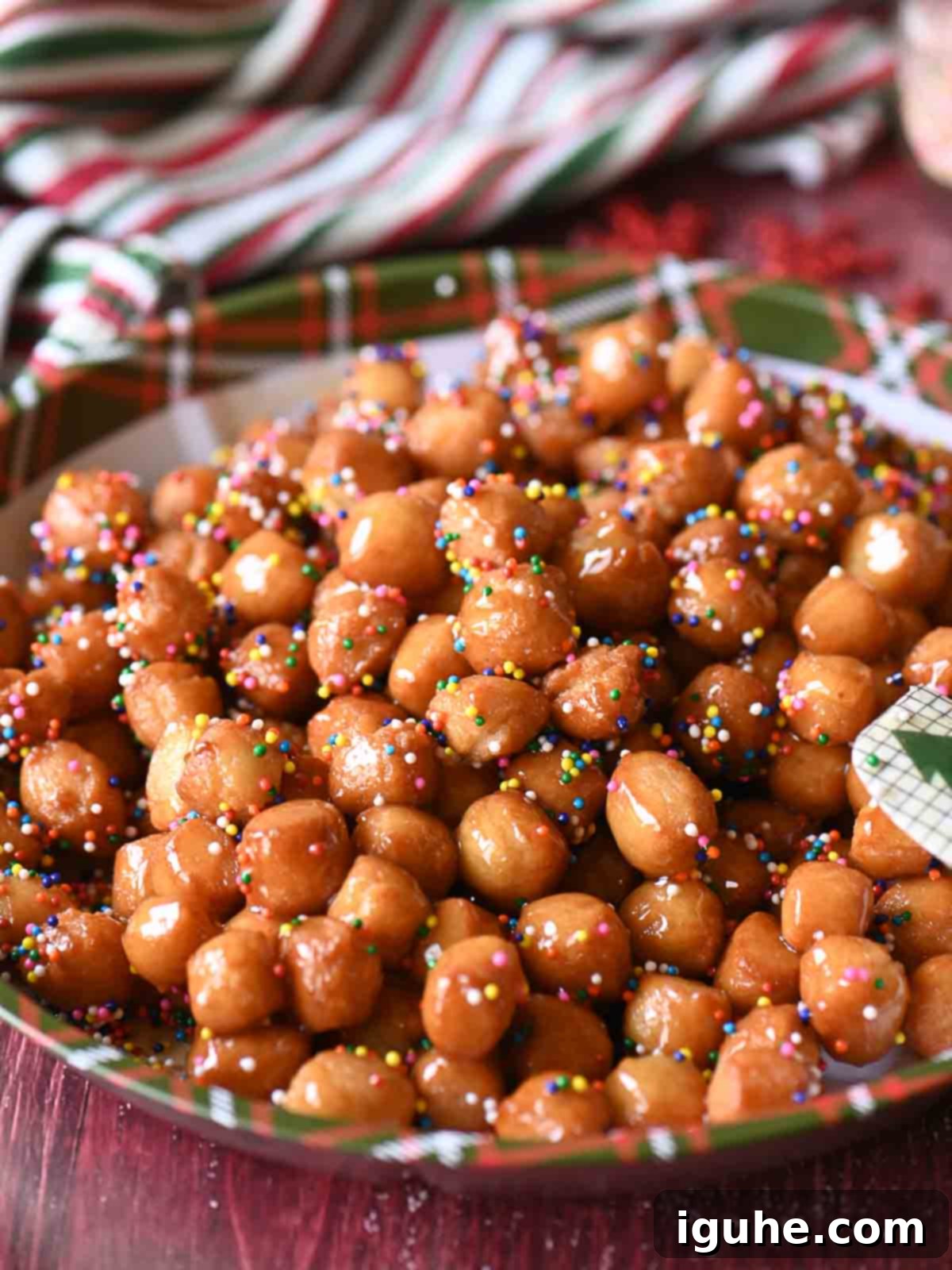
Growing up, a tray of struffoli (also known as pignolata in some regions) never lasted long around my family, especially during the holidays. However, I must confess that we weren’t particularly fond of the mass-produced versions sold in Italian bakeries. My grandmother used to make her own struffoli every Christmas, a tradition that we all eagerly anticipated. Sadly, we never managed to get her recipe before she passed away.
Years later, a friend generously shared her struffoli recipe with me, and it was a complete game-changer. My mother and I decided to give it a try, and we were immediately captivated. It was, without a doubt, the best struffoli we had ever tasted! Over the years, we’ve refined and perfected the recipe, incorporating our own special touches to enhance the flavors and textures. Now, I’m thrilled to share our perfected version with you, so you can experience the joy of homemade struffoli.
Ingredients for Italian Honey Balls: A Deeper Dive
Our struffoli recipe stands out from traditional Italian honey balls due to a unique twist. Our recipe shares similarities with Turdilli, a fried dough delicacy hailing from Calabria, Italy, which add a deeper flavor profile.
The key difference lies in the dough. While traditional struffoli dough often incorporates a sweet liqueur like anisette or limoncello, Turdilli dough is made with a fortified or sweet wine. We use vermouth, which adds a subtle complexity and keeps the dough incredibly tender. Consider our struffoli a delightful fusion of these two iconic fried treats! This blend offers a distinct flavor that elevates the experience of enjoying Italian Honey Balls.
- Baking Powder and Eggs: These essential ingredients work together to create a light and airy texture. The baking powder acts as a leavening agent, causing the dough to rise and puff up beautifully during frying. The eggs contribute to the dough’s richness, structure, and overall tenderness.
- Vermouth: We prefer using dry vermouth (white), but the possibilities extend beyond that! I’ve experimented with red vermouth and even ventured into apricot brandy territory, and the results have been fantastic. Vermouth is the secret ingredient that keeps the dough incredibly tender and adds a subtle depth of flavor that complements the sweetness of the honey.
- Oil for Frying: When it comes to frying, the type of oil you choose can make a difference. Opt for a neutral oil with a high smoke point, such as vegetable or canola oil. Peanut oil is another excellent choice, imparting a slightly nutty flavor to the struffoli. However, peanut oil tends to be more expensive, so consider your budget and flavor preferences.
- Honey: The star of the glaze! Choose a mild honey, such as clover or wildflower honey, to complement the delicate flavor of the dough without overpowering it. The honey should be pure and of good quality to ensure the best possible flavor and texture. Local honey is a wonderful option, supporting local beekeepers and adding a unique regional flavor.
- Cinnamon: Cinnamon adds a warm, comforting spice that perfectly complements the sweetness of the honey. Traditionally, we use whole cinnamon sticks to infuse the honey with a subtle cinnamon flavor while it warms (we also use them to decorate the struffoli trays!), but ground cinnamon works just as well.
- Sprinkles: Sprinkles are the perfect finishing touch, adding a festive and playful element to the struffoli. Our family uses the tiny dot sprinkles known as nonpareils, but you can also use traditional sprinkles or “jimmies.” We often coordinate the sprinkle colors with the holiday: pastel for Easter or red and green for Christmas.
A comprehensive list of ingredients, along with specific quantities, can be found in the recipe card below for your convenience.
Step-by-Step Instructions: Crafting Your Own Struffoli
Follow these detailed instructions to ensure your Italian honey balls turn out perfectly every time. Consider enlisting the help of a friend or family member to make the process even more enjoyable! One person can focus on rolling and cutting the dough, while the other takes charge of frying.
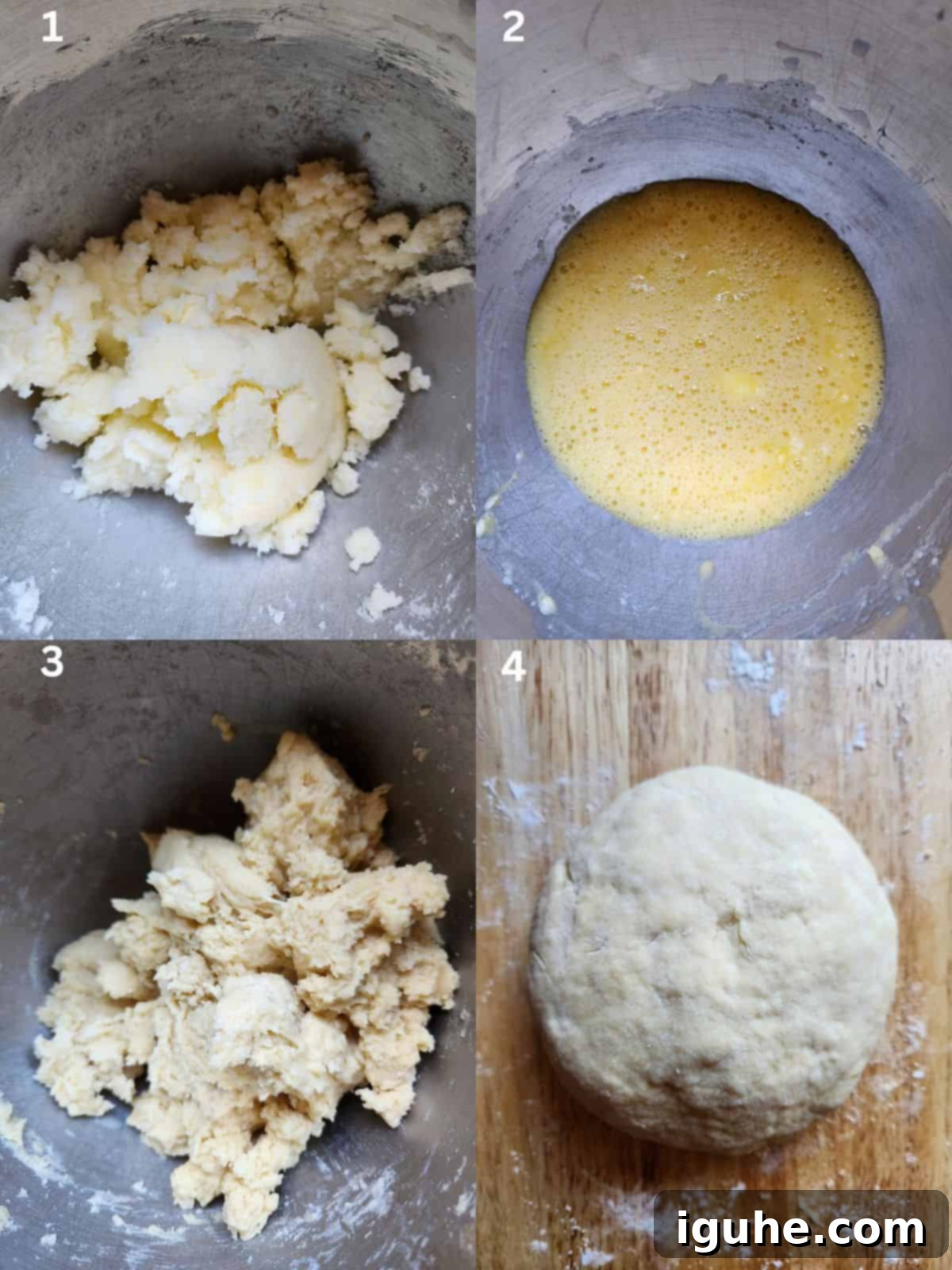
Step 1. In a mixing bowl, cream together the butter and sugar until the mixture is light and fluffy. This process incorporates air into the batter, contributing to the struffoli’s delicate texture. Step 2. Add the eggs one at a time, mixing well after each addition to ensure they are fully incorporated into the batter. Step 3. Gradually add the dry ingredients in batches, alternating with the vermouth, and mix on low speed until a soft dough begins to form. Be careful not to overmix the dough, as this can result in tough struffoli. Step 4. Transfer the dough to a lightly floured surface and knead it a few times until it forms a smooth ball. Cover the dough with plastic wrap or a clean kitchen towel and let it rest for at least 30 minutes. This resting period allows the gluten to relax, resulting in a more tender and pliable dough.
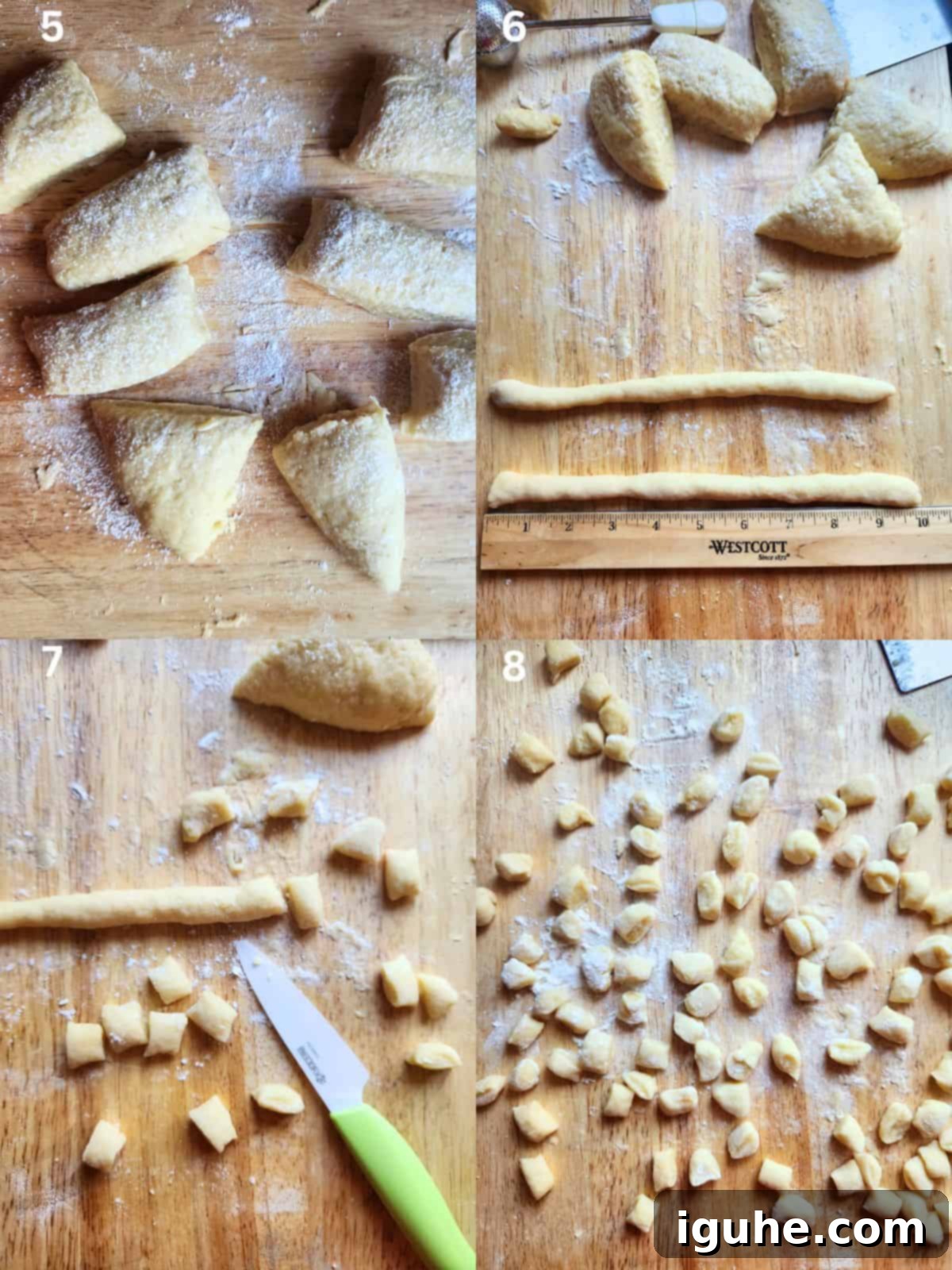
Step 5. Divide the dough into smaller, manageable pieces to make the rolling process easier. Step 6. On a lightly floured surface, roll each piece of dough into long ropes, about ½ inch thick. The length of the ropes doesn’t matter too much, just make sure they are easy to work with. Steps 7-8. Using a sharp knife or bench scraper, cut the dough ropes into small, pillow-shaped pieces, approximately ½ inch in size. Toss the cut dough pieces in a light coating of flour to prevent them from sticking together. Continue with the remaining dough, always keeping the dough covered as you work to prevent it from drying out.
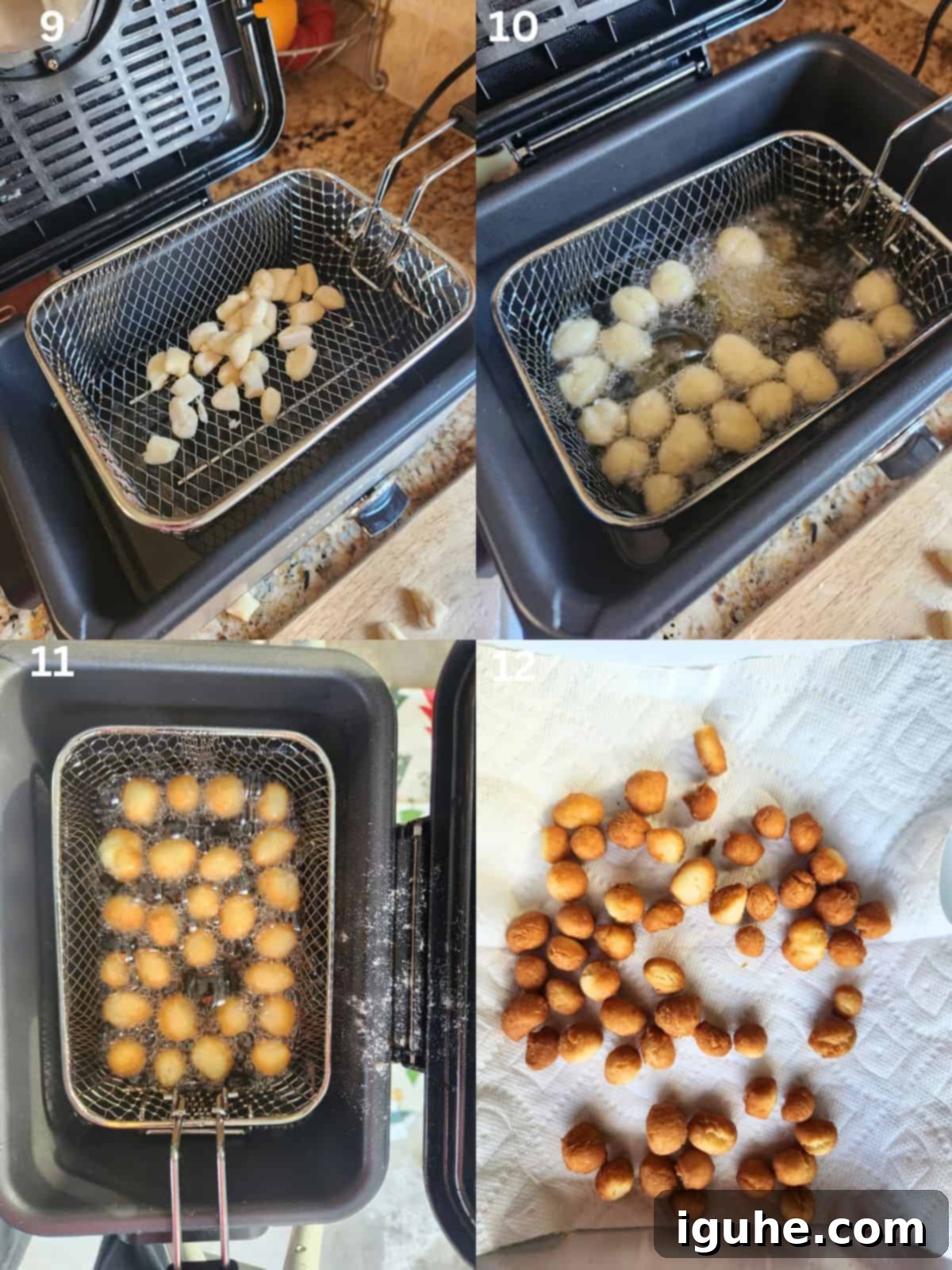
Steps 9-12. Heat the oil to 350°F (175°C) using an electric deep fryer or a large, heavy-bottomed pot with a candy thermometer. Carefully place a handful of the cut dough pieces into the hot oil, being careful not to overcrowd the fryer. Fry the dough pieces for 2-3 minutes, or until they are golden brown and puffed up. Use a fry basket or slotted spoon to remove the fried struffoli from the oil and transfer them to a paper towel-lined tray to cool. Continue frying in batches until all of the dough is cooked.
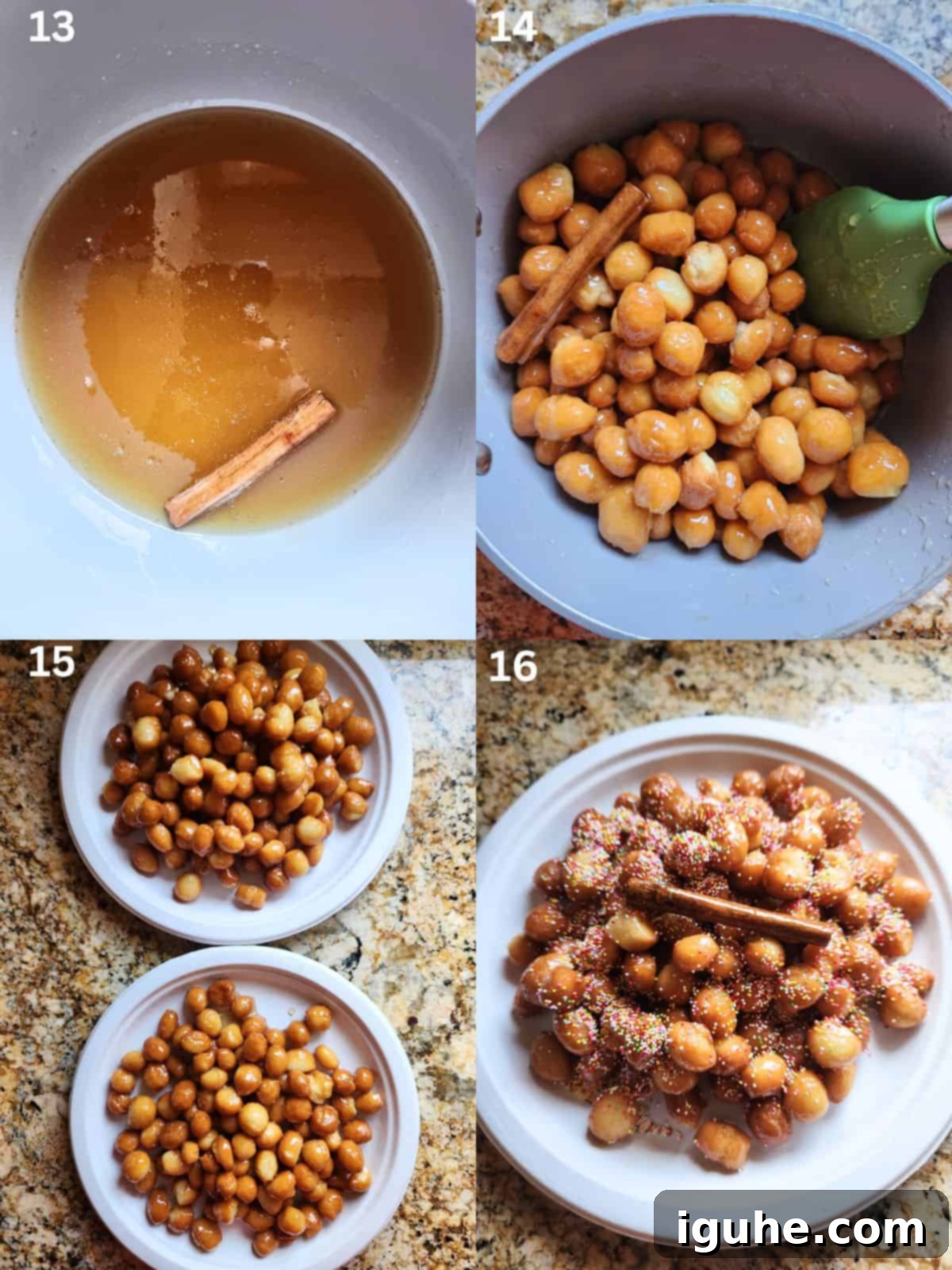
Steps 13-16. Gently warm the honey in a large saucepan over low heat. Add a splash of lemon oil, vanilla extract and ground cinnamon. Once the honey is warm and smooth, add the fried struffoli and gently toss to coat them evenly. Divide the honey-coated struffoli onto plates or trays and immediately sprinkle with the colored sprinkles. Serve immediately and enjoy the delightful combination of textures and flavors. Or, store them in an airtight container for later.
*These are abbreviated instructions. The full list of directions and quantities can be found in the recipe card below.
Expert Tips for Perfect Struffoli
- Cover the Dough: To prevent the dough from drying out while you’re rolling and cutting it, always keep the remaining dough covered with a towel or plastic wrap. This will ensure that the dough remains pliable and easy to work with.
- Oil Temperature is Key: Maintaining the correct oil temperature is crucial for achieving perfectly cooked struffoli. Keep the oil temperature consistently at 350°F (175°C). If the oil is too hot, the struffoli will brown too quickly on the outside while remaining undercooked on the inside. If the oil is not hot enough, the struffoli will absorb too much oil and become greasy. If you’re frying the struffoli in a pot on the stove, use a deep-fry or instant-read thermometer to monitor the oil temperature accurately.
Struffoli Variations: Customize Your Honey Balls
Italian struffoli recipes are passed down through generations and vary from family to family, resulting in countless regional variations. When experimenting with this dish, you will encounter a diverse range of tastes and textures, so feel free to personalize the recipe to align with your preferences and culinary style.
- Citrus Zest: For a touch of brightness and aroma, incorporate lemon or orange zest into the dough. The citrus zest adds a refreshing note that beautifully complements the sweetness of the honey.
- Liqueur Infusion: Instead of dry vermouth, explore other flavorful liqueurs, such as anisette, limoncello, rum, or Marsala. Experimenting with different liqueurs can create unique flavor profiles that will surprise and delight your taste buds. I’ve even experimented with sweet red vermouth and apricot brandy, with fantastic results!
- Honey Syrup Enhancements: Take your honey syrup to the next level by infusing it with anisette or lemon oil for a more pronounced flavor. Explore using other warming spices, such as ginger or cloves, to add complexity and depth to the syrup.
Serving Suggestions: The Perfect Occasion for Struffoli
Traditionally, Italian honey balls are a highlight of the Christmas season, but they are also a popular dessert for Easter celebrations. You’ll often find them adorning holiday tables alongside other festive favorites, such as pizzelle, lemon drops, or pignoli cookies.
During the holidays, it’s common to give trays of homemade struffoli as hostess gifts. To make your gift extra special, tuck a cinnamon stick on top for decoration and wrap the tray in plastic wrap or clear cellophane, finishing it with a festive bow. If a little honey settles at the bottom of the tray, simply give the struffoli a gentle stir to re-coat everything.
Make-Ahead and Storage Tips: Enjoy Struffoli Anytime
Struffoli can be safely stored in an airtight container at room temperature for up to one week, although they taste best when they are freshly made. The struffoli will maintain their crispiness on the first day, but they will soften slightly over time. To be honest, we’ve made them two weeks before Christmas on many occasions, and they kept just fine. They just needed a stir as the honey sank to the bottom.
Another option is to fry the struffoli in advance and freeze them without the honey glaze. When you’re ready to serve them, simply defrost the fried struffoli, melt the honey, toss them together, and serve.
Frequently Asked Questions About Struffoli
Struffoli have a dominant honey flavor, derived from the generous honey glaze. You might detect subtle citrus notes if the recipe includes citrus zest. The texture is initially crunchy on the outside and soft on the inside, especially right after frying. Over time, they develop a cake-like texture that is equally delightful and my personal preference.
Explore More Italian Dessert Recipes
Visit my Italian brunch category for even more delectable dessert ideas!
- Espresso Coffee Panna Cotta
- Salted Caramel Affogato
- Orange Ricotta Zeppole (Italian Ricotta Doughnuts)
- Easy Italian Pignoli Cookies
Made this recipe? I’d love to hear about it! Please leave a ⭐⭐⭐⭐⭐ rating and comment below the recipe. Snapped a photo? Tag @brunchandbatter on Instagram so I can see your creation!
📖Recipe